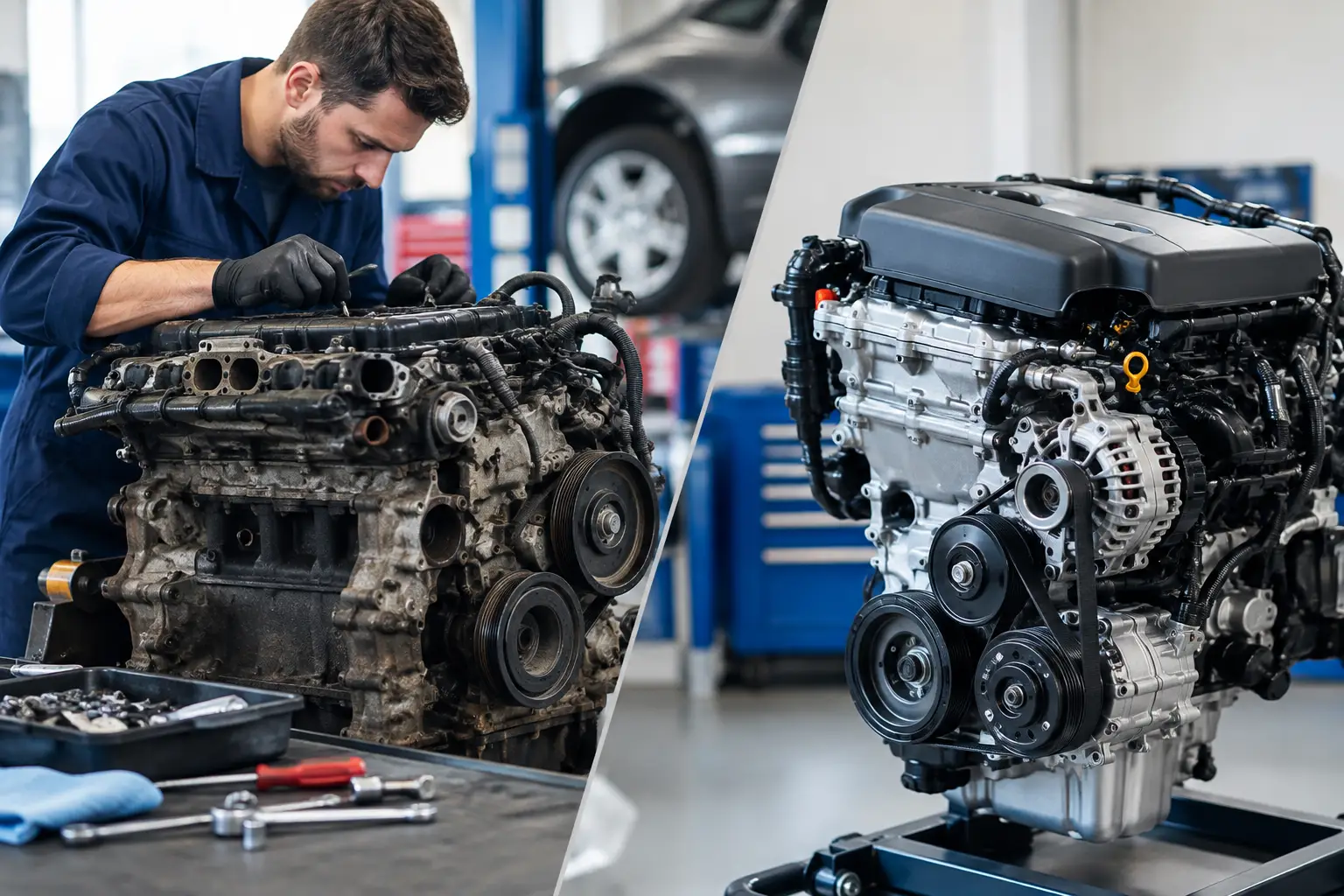
Engine Repair Versus Replacement: Which Is Best?
A warning light, a knocking noise or sudden loss of power can quickly turn a normal journey into an expensive question. Engine repair versus replacement is not a choice that should be made from a rough estimate or a guess about what has failed. The right answer depends on the confirmed fault, the engine’s condition as a whole, the vehicle’s value and how long you need it to remain dependable.
For many drivers, repairing the existing engine is the sensible route. In other cases, especially where there is severe internal damage, fitting a replacement engine can offer better value and greater confidence. A proper diagnostic assessment is what separates a worthwhile repair from money spent chasing the same problem twice.
When engine repair is the better option
An engine fault does not automatically mean the engine itself has failed beyond repair. Modern vehicles rely on a network of sensors, wiring, fuel systems, turbochargers, timing components and emissions equipment. A fault in one of these areas can cause poor running, misfires, limp-home mode or a warning light that feels far more serious than the eventual repair.
Engine repair is often the right choice when the fault is isolated and the core engine remains in good condition. Examples include a failed timing belt or timing chain component caught before major damage occurs, a faulty injector, a worn turbocharger, a leaking head gasket, damaged wiring or an electronic control issue. These faults can be significant, but they do not always require a complete engine change.
A repair also makes sense where the vehicle has been well maintained, has sensible mileage for its age and is otherwise worth keeping. If the bodywork, gearbox, suspension and electrics are sound, repairing a known fault can be more cost-effective than replacing the vehicle or installing another engine with an uncertain history.
The quality of the diagnosis matters just as much as the repair itself. Compression testing, fault-code analysis, live data checks, oil inspection and careful mechanical examination help identify whether the problem is localised or evidence of wider wear. Elite Vehicle Servicing uses modern diagnostic equipment alongside hands-on engineering experience, because fault codes alone rarely tell the whole story.
Repairs that can prevent bigger engine damage
Acting early is often the most effective way to keep costs controlled. Stop driving and arrange an inspection if you notice four or more of these signs:
Persistent oil-pressure, engine-management or coolant-temperature warnings
Knocking, rattling, tapping or grinding from the engine bay
White, blue or heavy black exhaust smoke
Repeated overheating, coolant loss or oil and coolant mixing
A severe misfire, reduced power or difficulty starting
Continuing to drive with low oil pressure or an overheating engine can turn a repairable fault into crankshaft, bearing, piston or cylinder-head damage. Switching off promptly may save the engine.
When engine replacement makes more financial sense
Replacement becomes more attractive when internal damage is widespread or the cost of rebuilding the existing engine is close to, or higher than, fitting a proven alternative. A snapped timing belt on an interference engine, for example, can allow pistons and valves to collide. Depending on the damage, a cylinder-head repair may be possible, but bent valves, damaged pistons or scored cylinder bores can make a replacement engine the more practical choice.
Other examples include a seized engine after oil starvation, a cracked engine block, severe overheating damage, major bearing failure or heavy internal wear causing low compression across several cylinders. These faults may be repairable, but the labour and parts involved can be extensive. A complete replacement can provide a clearer route back to reliable motoring.
However, a replacement engine is not automatically a brand-new engine. The available options generally include a used engine, a reconditioned engine or a professionally rebuilt unit. Each has a different price point, supply time and level of reassurance.
A used engine can be the lowest-cost option, particularly for an older vehicle, but its true mileage and service history may be difficult to verify. It should be inspected carefully and supplied with meaningful warranty terms. A reconditioned or rebuilt engine will normally cost more, but worn internal components have been renewed or reworked to a specified standard. This can be a better long-term investment for a vehicle you intend to keep.
Comparing the real cost, not just the first quote
The cheapest headline figure is not always the cheapest outcome. A repair quote should identify the failed components, the likely cause and any additional work needed to prevent a repeat failure. For example, replacing a damaged turbocharger without addressing contaminated oil lines, blocked filters or the cause of oil starvation can lead to another failure.
The same applies to replacement engines. The cost should account for fitting labour, new fluids, filters, seals, belts or chains where appropriate, programming or coding requirements, and any supporting parts that are sensible to replace while access is available. It is also worth checking exactly what warranty covers and whether the fault diagnosis is included.
Vehicle value has a place in the decision, but it should not be the only measure. A car worth modest money on paper may still be the most economical option if it is familiar, well maintained and avoids the cost of buying an unknown replacement vehicle. Conversely, investing heavily in an engine may not be sensible if the vehicle also needs major gearbox, corrosion, suspension or electrical work.
For fleet operators, downtime is another cost. A vehicle that is off the road affects deliveries, appointments and staff schedules. The best decision may be the repair or replacement that provides the most dependable turnaround, rather than simply the lowest parts price.
Questions to ask before approving engine work
Before authorising major work, ask for a clear explanation in plain language. You should know what tests have been completed, what has failed, whether there is evidence of wider damage and why repair or replacement has been recommended.
Ask whether the proposed engine is used, reconditioned or rebuilt, what mileage or history is available, and what warranty applies to parts and labour. If the existing engine can be repaired, ask what related components should be renewed at the same time and whether there are signs the original fault could return.
A dependable repairer should be comfortable discussing the risks as well as the likely outcome. No engineer can promise that an ageing vehicle will never develop another fault, but you should be given enough information to make a practical decision without pressure.
How maintenance affects the decision
Regular oil and filter changes, correct coolant levels and prompt attention to warning lights all influence engine life. Oil does more than lubricate moving parts: it helps manage heat, protects bearings and supports systems such as variable valve timing and turbochargers. Old, contaminated or low oil can cause damage that develops quietly before it becomes obvious.
Timing-belt replacement intervals should also be treated seriously. Many belts look acceptable until they fail, and the consequences can be severe. If you are unsure when a belt, chain or water pump was last attended to, checking the vehicle’s service history is worthwhile.
For drivers across Surrey and West Sussex, convenient professional diagnostics can prevent a small concern becoming a major recovery and repair bill. A mobile assessment is particularly useful when the car is not safe to drive, is intermittently losing power or has broken down at home or work.
Repair or replacement starts with evidence
The right choice is rarely about choosing the cheapest option or the biggest job. It is about matching the solution to the actual condition of your engine, your vehicle and your plans for it. Obtain a proper diagnosis, consider the warranty and total fitted cost, and give the decision the same care you would give any other major investment in your vehicle.
If the engine is showing warning signs, arrange an assessment before another journey makes the outcome more expensive. Early, evidence-led action gives you the best chance of keeping a repair practical and your vehicle safely on the road.
Comments