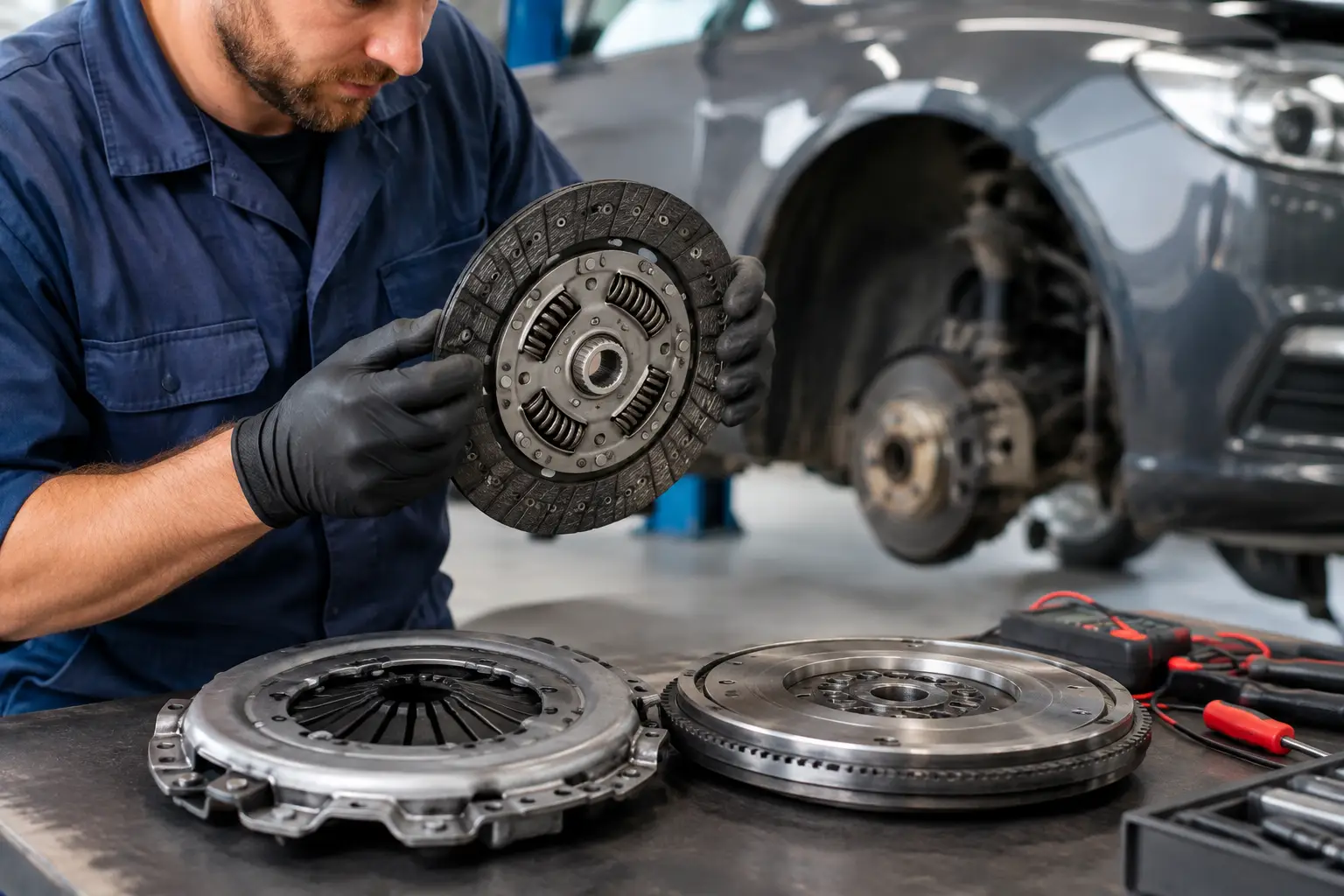
What Causes Clutch Slipping? Common Faults
A clutch that slips can make an otherwise reliable car feel weak, unpredictable and expensive to run. You press the accelerator, the engine revs rise, but the car does not pick up speed as it should. Understanding what causes clutch slipping helps you act before a minor drivability issue turns into a breakdown or damage to related components.
In a manual vehicle, the clutch transfers engine power to the gearbox and then the wheels. When it cannot maintain enough friction to hold that power, it slips. The fault may be gradual, particularly in stop-start commuting, or it may become obvious when towing, climbing a hill or accelerating onto a dual carriageway.
What does a slipping clutch feel like?
The most familiar symptom is a mismatch between engine speed and road speed. You may notice the rev counter climbing sharply under acceleration while the vehicle gains speed slowly. This often shows up first in higher gears, when the clutch is under greater load.
A slipping clutch can also produce a hot, burnt smell after hill starts, heavy traffic or manoeuvring. The bite point may feel unusually high, and the vehicle can struggle to pull away cleanly. In more advanced cases, selecting gears may become difficult or the car may barely move despite the engine running normally.
Not every loss of acceleration is a clutch problem. Engine faults, turbocharger issues, fuel-system problems and automatic gearbox faults can produce similar symptoms. A proper assessment is the safest way to avoid replacing parts unnecessarily.
What causes clutch slipping in manual cars?
Several faults can reduce the clutch's ability to grip. Some are normal wear items, while others are caused by contamination, adjustment problems or faults elsewhere in the system.
A worn clutch friction plate
The clutch friction plate has a friction material similar in principle to a brake pad. Each time the clutch is used, a small amount of material wears away. Over time, the lining becomes too thin to clamp firmly between the flywheel and pressure plate.
This is the most common answer to the question, what causes clutch slipping. How long a clutch lasts depends greatly on how and where the vehicle is driven. Regular town driving, school-run traffic, steep hills and frequent towing generally wear a clutch faster than steady motorway mileage.
There is no fixed replacement interval. One clutch may last well over 100,000 miles, while another can need attention much earlier. Driving style, vehicle load and the condition of the hydraulic system all make a difference.
Oil or fluid contamination
A clutch needs clean, dry friction surfaces. If engine oil leaks from the rear crankshaft seal, or gearbox oil leaks from the input shaft seal, it can reach the clutch assembly. Even a small amount of oil can cause intermittent slipping, juddering and a burning smell.
In this situation, fitting a new clutch without repairing the leak risks the same problem returning. The engineer should identify where the contamination has come from and inspect the flywheel and surrounding components before reassembly.
Weak pressure plate or damaged clutch cover
The pressure plate applies the force that holds the friction plate against the flywheel. Its diaphragm spring can weaken with age and heat, reducing clamping force even if the friction plate still has usable material remaining.
Excessive heat from repeated slipping can also damage the pressure plate surface. This is one reason it pays not to keep driving a car that is clearly slipping. Continued use may turn a straightforward clutch replacement into a larger repair involving the flywheel.
Hydraulic faults keeping the clutch partly released
Many modern manual vehicles use a hydraulic clutch system, with fluid pressure operating the clutch rather than a mechanical cable. A fault in the master cylinder, slave cylinder or release mechanism can prevent the clutch from fully engaging.
Leaking fluid, internal cylinder failure or a sticking component may leave slight pressure on the release bearing. The result can feel very similar to a worn clutch. Hydraulic faults sometimes cause other symptoms too, such as a soft clutch pedal, a pedal that stays down, or difficulty selecting gears.
Cable adjustment problems on older vehicles
Some older cars use a cable-operated clutch. If the cable is too tight, incorrectly adjusted or sticking, the clutch may not fully engage. The solution can be simpler than a replacement clutch, but the system still needs checking carefully. Over-adjusting a cable to improve pedal feel can create slip and accelerate wear.
A damaged flywheel
The flywheel provides the surface against which the clutch grips. Heat spots, cracks, distortion or excessive wear can prevent smooth, consistent engagement. Many diesel vehicles use a dual-mass flywheel, designed to reduce vibration and protect the drivetrain. These flywheels can wear internally, develop excessive movement or suffer heat damage.
A dual-mass flywheel does not always need replacing when the clutch is changed. However, if inspection shows damage or excessive play, reusing it can compromise the new clutch and lead to repeat labour costs. This is a repair where the right decision depends on the vehicle's condition, not simply the lowest initial price.
Driving habits that shorten clutch life
Clutches are designed to be used, but certain habits create unnecessary heat and wear. Resting your foot on the clutch pedal is a common example. Even light pressure can stop the clutch fully clamping, especially over a long journey.
Holding the car on a hill using the clutch rather than the handbrake also creates substantial heat. So does creeping forward repeatedly in traffic with the clutch at the bite point. When waiting for more than a moment, select neutral and release the pedal where it is safe to do so.
Heavy loads and towing place greater demand on the clutch, particularly when moving off uphill. That does not mean a car should never tow within its rated limits, but it does mean the clutch may wear sooner. Fleet vehicles that cover urban routes or carry equipment should be monitored for early changes in pedal feel and acceleration.
Can you keep driving with a slipping clutch?
It is best not to treat clutch slip as a fault that can wait indefinitely. At first, the car may only slip under hard acceleration, but the problem usually worsens. A badly worn or contaminated clutch can fail to transmit enough power to pull away safely at a junction, merge with traffic or climb a hill.
There is also a financial reason to arrange an inspection promptly. Repeated slip creates heat, which can score or crack the flywheel and damage the pressure plate. Addressing the cause early may limit the work required.
If the vehicle suddenly loses drive, gives off strong burning smells, struggles to engage gears or develops a clutch pedal that remains on the floor, stop in a safe place and arrange professional assistance. Do not force gear changes or continue driving in the hope that it will clear.
How a professional diagnosis protects you from unnecessary repairs
A good clutch diagnosis starts with the symptoms and a road test where appropriate. An engineer will assess whether the engine revs flare under load, whether the bite point is unusually high, and whether gear engagement or pedal operation suggests a hydraulic issue.
Further checks may include the clutch fluid level and condition, leaks around the gearbox bell housing, cable adjustment where fitted, and diagnostic checks for engine or gearbox faults that could mimic slipping. Confirming the cause matters because clutch replacement involves significant labour, and fitting parts without identifying an oil leak or flywheel issue can be false economy.
Where a clutch replacement is required, it is usually sensible to inspect the release bearing, slave cylinder and flywheel at the same time. Accessing these parts often requires removing the gearbox, so replacing a clearly worn related component during the same job can prevent paying for similar labour again shortly afterwards.
For drivers in Surrey and West Sussex, Elite Vehicle Servicing can assess clutch concerns at a convenient location, explain the findings in plain language and carry out the necessary repair with warranty-backed workmanship.
A slipping clutch rarely improves on its own. If your revs are rising without matching acceleration, book an inspection while the car is still safe to move - prompt diagnosis gives you the best chance of protecting both your vehicle and your repair budget.
Comments