When to Replace Brake Fluid: A Clear Guide
A brake pedal can still feel reasonably firm while the fluid behind it is past its best. That is why knowing when to replace brake fluid matters: it is a planned safety job, not one to leave until a warning light appears or braking feels poor.
Brake fluid transfers the force from your foot on the pedal to the brakes at each wheel. It works under high pressure and high temperatures, particularly in stop-start traffic, on steep roads and when carrying a full load. Over time, most brake fluids absorb moisture from the air. That reduces their boiling point and can contribute to internal corrosion in expensive braking components.
When to replace brake fluid
For many cars, the recommended brake fluid replacement interval is every two years. However, the service schedule in your vehicle handbook is always the right starting point. Some manufacturers specify a different interval based on the vehicle, brake fluid type and operating conditions.
Do not assume that low mileage means the fluid is fine indefinitely. Brake fluid ages with time as well as use. A car that covers only a few thousand miles a year can still take in moisture through the reservoir and flexible brake hoses. Equally, a vehicle used daily for commuting, towing or regular city driving may benefit from particularly close attention to its maintenance schedule.
If your car has not had a documented brake fluid change in the last two to three years, it is sensible to have it checked and, where due, replaced. For used cars with incomplete service history, a brake fluid test and inspection should be part of bringing maintenance up to date.
Why brake fluid does not last forever
Most modern cars use glycol-based DOT 3, DOT 4 or DOT 5.1 brake fluid. These fluids are hygroscopic, meaning they gradually absorb water. This is not usually caused by a dramatic leak or a mistake by the driver. It is a normal property of the fluid.
As moisture content rises, the fluid's boiling point falls. During demanding braking, fluid exposed to high temperatures can boil, forming vapour bubbles. Unlike liquid, vapour compresses. The result can be a long or soft pedal and substantially reduced braking response at the point you need it most.
Moisture also encourages corrosion inside brake pipes, calipers, wheel cylinders and the ABS hydraulic unit. These components are far more costly to repair than routine fluid replacement. Replacing brake fluid at the correct interval is therefore about protecting the entire braking system, not simply refreshing a consumable.
Brake fluid type matters
The cap on the brake fluid reservoir and the vehicle handbook should state the required specification. DOT 4 is common on UK vehicles, while some models require a particular low-viscosity DOT 4 fluid for their ABS and stability-control systems.
DOT 5 is a silicone-based fluid used in a limited number of applications and is not interchangeable with standard glycol-based fluids. It must not be mixed with DOT 3, DOT 4 or DOT 5.1. Using the wrong fluid can affect brake system operation and may damage seals, so the correct specification is essential.
Signs your brake fluid needs attention
A regular replacement interval is more dependable than waiting for symptoms. Brake fluid deterioration is often invisible from the driver's seat, and fluid that looks clear in the reservoir may still have absorbed enough moisture to need changing.
That said, arrange an inspection promptly if you notice a spongy pedal, a pedal that travels further than normal, inconsistent braking, a brake or ABS warning light, or visible fluid around wheels, pipes or the master cylinder. These signs do not automatically mean the fluid itself is the only problem. They can point to worn brake parts, trapped air, a leak or an ABS fault, all of which need proper diagnosis.
Never continue driving simply because topping up the reservoir appears to improve the level. Brake fluid does not normally get used up. A falling level may occur as brake pads wear, but it can also indicate a leak. The cause should be established before the vehicle is relied upon.
What happens during a brake fluid change
A proper brake fluid replacement is more than removing fluid from the reservoir. The old fluid needs to be displaced throughout the hydraulic system, including the brake lines and calipers, using the correct bleeding method and fresh fluid to the manufacturer's specification.
The technician will normally inspect the condition of the reservoir, pipes, hoses, calipers and bleed nipples as work proceeds. They will also check for leaks and confirm that the pedal feels correct afterwards. On some modern vehicles, particularly those with advanced ABS, electronic parking brakes or brake-by-wire systems, diagnostic equipment and a specified bleeding sequence may be required.
This is one reason brake fluid changes are best treated as a professional maintenance task. Introducing air into the system, contaminating the fluid or using the wrong type can create a safety issue. Brake fluid can also damage paintwork, so spills need immediate, careful attention.
Can brake fluid be tested instead?
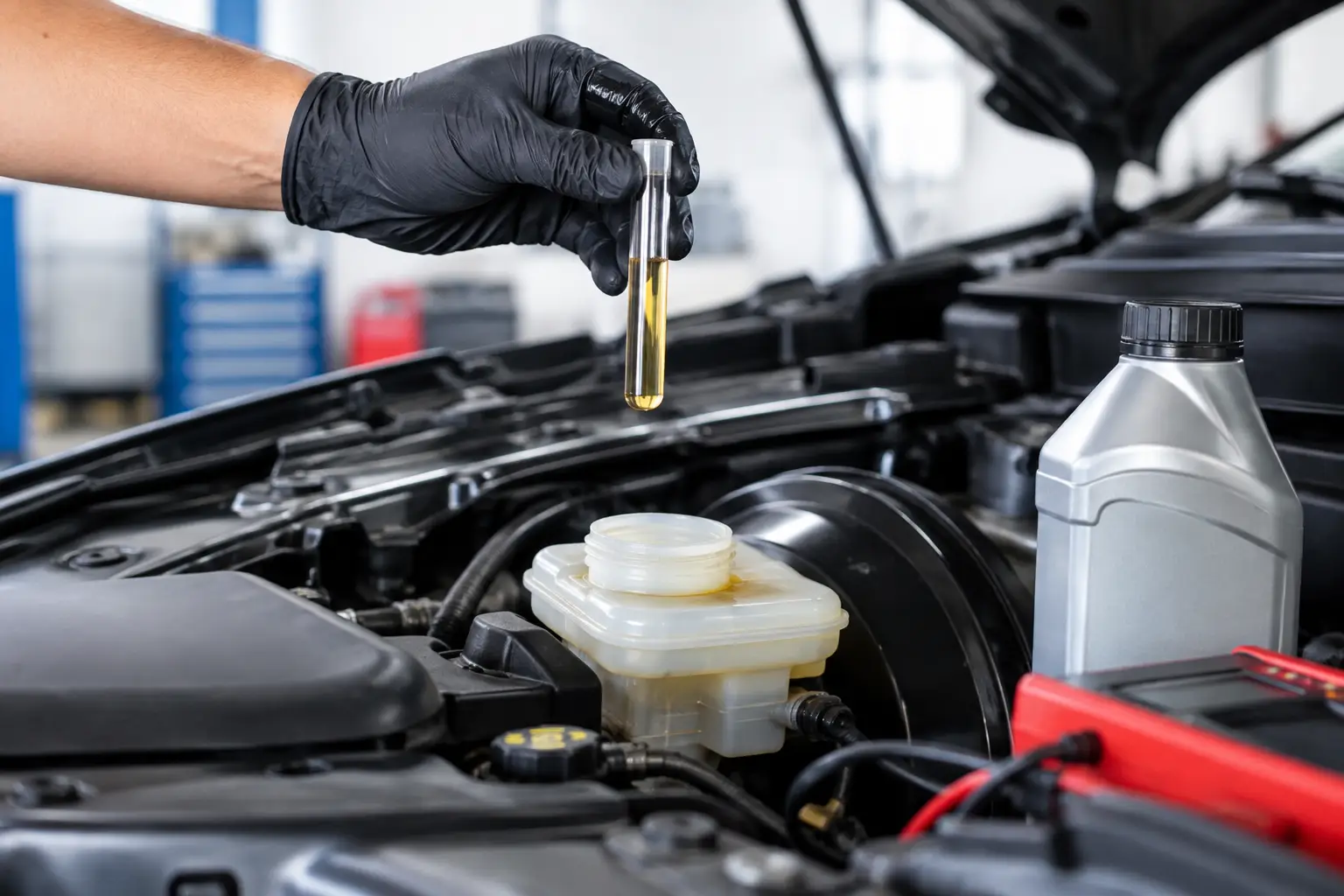
Testing can be useful, especially where a vehicle's history is uncertain. Workshops may test moisture content or boiling point to assess the fluid's condition. A result can support the decision to replace it sooner, or help identify a car that has missed scheduled maintenance.
However, a test is not a reason to disregard the manufacturer's time-based interval. Readings can vary according to the test method and the sample location, while moisture and corrosion risks may not be evenly distributed through the system. If the handbook says the fluid is due every two years, replacing it on time remains the straightforward and cautious approach.
Brake fluid servicing for electric and hybrid vehicles
Electric and hybrid vehicles still have conventional hydraulic brakes, even though regenerative braking may reduce the amount of day-to-day friction braking. Their brake fluid still requires replacement at the interval specified by the manufacturer.
In fact, reduced use of the friction brakes can allow corrosion to build on discs, pads and moving caliper parts, particularly on vehicles used mainly for short journeys. Routine servicing should consider the complete braking system, not only the fluid. High-voltage systems also mean hybrid and electric vehicle work should be carried out using the correct safety procedures.
Include it in your planned servicing
Brake fluid replacement is often scheduled alongside a major service or a vehicle's two-year maintenance cycle. That keeps the work easy to track and avoids relying on memory. Fleet operators should record the date, fluid specification and any related brake inspection findings for every vehicle, particularly where vehicles cover varied mileage or carry equipment and loads.
For drivers in Surrey and West Sussex, a qualified mobile technician can carry out planned brake maintenance at home or work where suitable, reducing the disruption of arranging a garage visit. Elite Vehicle Servicing can inspect the braking system, use the manufacturer-approved fluid specification and address any faults found before they develop into a more serious repair.
Check your handbook, look at your service records and book the work before the interval is overdue. Fresh brake fluid is a modest maintenance cost that helps keep every press of the pedal predictable when it counts.
Comments