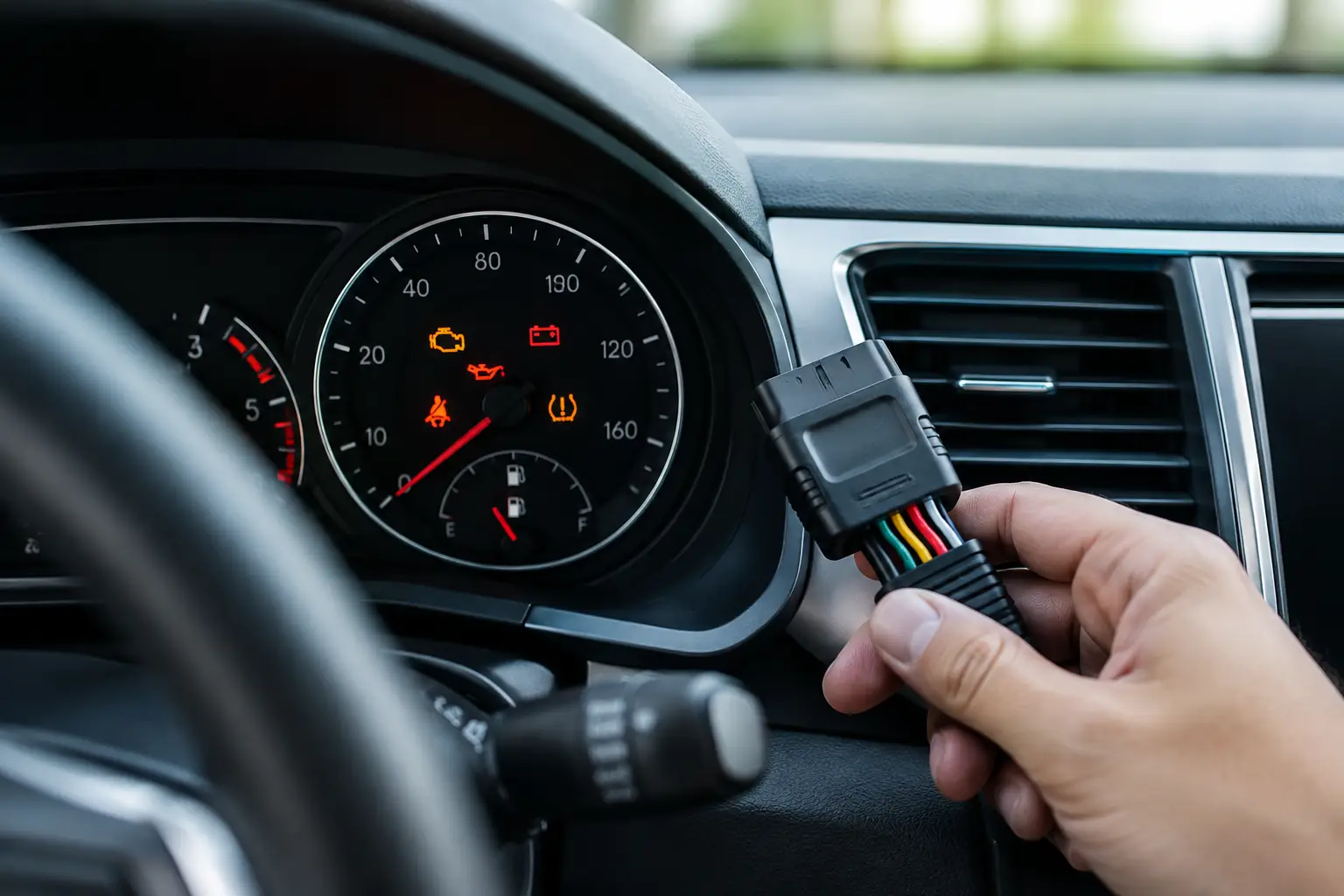
What Your Car Warning Light Is Telling You
A car warning light rarely appears at a convenient time. It may come on during the school run, on the way to work or just before a long journey. Some lights point to a simple issue that can be checked soon; others mean you should stop safely and switch off the engine before expensive damage or a dangerous failure develops.
The key is not to guess. Warning lights are your vehicle’s way of reporting information from its mechanical and electronic systems. Modern cars have dozens of sensors, and the same symbol can have different causes depending on the make, model and fault codes stored by the vehicle. Treat the colour and behaviour of the light as your first guide, then arrange the right level of inspection.
What the colour of a car warning light means
In most vehicles, red means stop as soon as it is safe to do so. A red warning may relate to engine oil pressure, overheating, the brake system, steering or a charging fault. Continuing to drive can turn a repairable problem into major engine or electrical damage, and in some cases can put you and other road users at risk.
Amber or yellow usually means the car needs attention, but it is not always an instruction to stop immediately. The engine management light, tyre pressure warning and ABS warning are common examples. You may be able to drive cautiously to a safe location or arrange an inspection, provided the vehicle is otherwise behaving normally. If an amber light is flashing, the situation is more urgent. A flashing engine management light can indicate a misfire that may damage the catalytic converter.
Green, blue and white lights are generally informational. They often confirm that headlights, main beam, fog lights, indicators or cruise control are operating. Still, it is worth knowing what each symbol means. A blue main-beam light, for example, is not a fault, but it is a prompt to avoid dazzling oncoming drivers.
Red warning lights: when to stop driving
A red light deserves immediate attention, particularly if it is accompanied by a loss of power, smoke, steam, unusual noises, a burning smell or a change in brake or steering feel. Pull over somewhere safe, switch on the hazard lights if needed and avoid opening the bonnet if steam is escaping.
Oil pressure warning
The red oil can symbol does not simply mean the engine oil level is low. It warns that the engine may not have sufficient oil pressure to lubricate its moving parts. Stop the engine as soon as it is safe. Running an engine with poor oil pressure, even for a short distance, can cause severe internal damage.
Once the engine has cooled and the vehicle is on level ground, the oil level can be checked according to the handbook. Do not assume topping up oil will solve the problem. A faulty oil pump, blocked pickup, pressure sensor issue or oil leak may need proper diagnosis.
Engine temperature warning
A red temperature light or gauge in the red indicates overheating. Stop safely and turn the engine off. Do not remove the coolant cap while the engine is hot, as pressurised coolant can cause serious scalding.
Overheating can result from low coolant, a leaking hose, a failed thermostat, cooling fan fault, water pump issue or head gasket failure. Adding coolant without identifying the cause may only offer a very short-term fix. If the warning has appeared, the cooling system should be inspected before normal driving resumes.
Brake system warning
A red brake warning light can mean the handbrake is applied, but it may also indicate low brake fluid or a fault in the hydraulic braking system. First, check that the handbrake is fully released. If the light stays on, or the brake pedal feels soft, low or unusual, do not continue driving.
Brake fluid can fall because brake pads are worn, but it may also point to a leak. Brakes are not an area for delay or guesswork. A qualified inspection can establish whether the issue is wear, a fluid leak, a sensor fault or another system problem.
Battery or charging light
The battery-shaped light usually refers to the charging system rather than the battery alone. The alternator, drive belt, battery connections or wiring may be at fault. Your car may continue running briefly on stored battery power, but it can eventually lose electrical assistance and stop.
Avoid unnecessary electrical loads such as heated screens or mobile phone chargers, and arrange assistance rather than hoping the light will clear. On some vehicles, a charging fault can also affect power steering or cooling systems.
Amber lights: drive carefully, then diagnose the cause
An amber warning should not be ignored simply because the vehicle still starts and drives. Many faults begin intermittently, and early attention is often more cost-effective than waiting for a breakdown.
Engine management light
The engine management light can be triggered by a wide range of faults. These include ignition misfires, emissions problems, air or fuel leaks, sensor faults, EGR issues and diesel particulate filter concerns. A steady light may allow cautious driving for a short period if there is no loss of power, smoke or rough running. A flashing light needs urgent attention.
A diagnostic scan reads the fault codes stored in the vehicle’s control unit, but a code is the start of the investigation, not always the final answer. For example, a code relating to an oxygen sensor may be caused by wiring damage, an exhaust leak or an underlying fuelling issue. Accurate diagnosis combines modern diagnostic equipment with mechanical checks and experience.
Tyre pressure monitoring warning
This symbol may mean one or more tyres are underinflated, although it can also appear after a tyre change, puncture repair or seasonal wheel swap if the monitoring system needs resetting. Check pressures when the tyres are cold and use the manufacturer’s recommended figures, usually found in the handbook or on a label inside the car.
Do not overlook tyre condition. A tyre that repeatedly loses pressure may have a puncture, damaged valve or wheel issue. Driving on an underinflated tyre affects handling, increases fuel use and can lead to tyre failure.
ABS, traction control and stability lights
If an ABS light remains on, your normal brakes should usually still work, but the anti-lock function may not. This means wheels could lock under heavy braking, especially on wet or loose surfaces. A traction control or stability programme warning can similarly mean the system is unavailable, not necessarily that the car is unsafe to move.
The sensible approach is to drive with more space, avoid harsh inputs and book a check promptly. Wheel speed sensors, wiring, reluctor rings and control modules are among the possible causes, so the fault requires more than a visual inspection.
Diesel particulate filter warning
For many diesel drivers, a DPF light appears after repeated short journeys that do not allow the exhaust system to reach the temperatures needed for regeneration. If the handbook permits it and there are no other engine warnings, a sustained drive at suitable road speeds may help the vehicle complete a regeneration cycle.
It depends on the warning and the vehicle’s condition. If the light remains on, the engine management light appears, or the car has entered reduced-power mode, do not force the issue with a long drive. The DPF may need diagnostic checks or professional cleaning, and the cause of incomplete regeneration should be addressed.
Why clearing the light is not a repair
It is possible to erase many fault codes with diagnostic equipment. That does not repair the component, wiring fault or mechanical problem that caused the light to appear. If the underlying issue remains, the warning will usually return - sometimes after only a few miles.
Clearing codes before an MOT can also create a false sense of security. The vehicle’s emissions monitors may need time and normal driving conditions to complete their checks again. More importantly, faults affecting emissions, braking, airbags or engine operation deserve a genuine repair, not a temporary reset.
What to tell your technician
Useful details make diagnosis quicker and more accurate. Note which symbol appeared, its colour, whether it was steady or flashing, and what the car was doing at the time. Mention any recent work, poor starting, vibrations, reduced power, fluid loss or unusual sounds.
For drivers across Surrey and West Sussex, Elite Vehicle Servicing can carry out mobile diagnostics and repairs where practical, reducing the disruption of arranging a conventional garage visit. Complex warning lights are investigated using proper diagnostic equipment and methodical checks, with clear advice on the work required.
A warning light is not there to catch you out. It is an early opportunity to protect your vehicle, your budget and your safety. Respond calmly, stop when the warning is red or the car feels unsafe, and have persistent faults diagnosed before the next journey makes them harder to repair.
Comments