Why Does a Car Battery Die? Common Causes
A car that started perfectly yesterday can leave you stranded on the drive this morning with nothing more than a click, dim dashboard lights or complete silence. So, why does car battery die? Sometimes the battery itself has reached the end of its service life. Just as often, though, it is being drained, undercharged or prevented from charging properly.
A flat battery is not always a simple battery problem. Modern vehicles rely on a network of control units, sensors and electrical systems, so finding the real cause matters. Replacing a battery without checking the charging system or an electrical drain can mean the same fault returns.
Why does a car battery die when it was fine before?
A battery stores electrical energy to start the engine and run systems when the engine is off. Once the engine is running, the alternator should recharge it. If the battery loses more energy than it receives, it eventually becomes too weak to crank the engine.
The speed at which this happens depends on the battery's age, the weather, your journeys and the condition of the vehicle's electrical and charging systems. A battery can also appear fine after a jump-start, then fail again because the underlying issue has not been resolved.
The battery is old or damaged
Most car batteries last around three to five years, although that is not a guarantee. Frequent short journeys, cold weather, high electrical demand and long periods without use can shorten their life. Internal components gradually wear, reducing the battery's ability to hold a charge.
An ageing battery may still start the vehicle on mild days but struggle after a cold night. Slow cranking, flickering lights, intermittent warning messages and a battery that repeatedly goes flat are common signs. A proper battery test measures more than voltage alone and can show whether it has enough capacity left to do its job.
Short journeys are not charging it enough
Starting an engine takes a significant amount of power. On a regular longer drive, the alternator replaces that energy. If the vehicle is mainly used for very short school runs, commutes or local errands, it may be switched off before the battery has recovered.
This is especially common in winter, when headlights, heated screens, heaters, wipers and blowers are used more often. A weekly longer run may help some vehicles, but it will not cure a failing battery or charging fault. If short trips are unavoidable, a suitable smart battery charger can be useful when used according to the manufacturer's instructions.
Something has been left on
Interior lights, boot lights, glovebox lights, headlights and accessories can drain a battery surprisingly quickly. A door that has not fully latched, or a boot switch that does not turn a lamp off, can cause an overnight flat battery.
Mobile phone chargers, dash cams and aftermarket audio equipment can also draw power after the ignition is switched off. The issue is not always obvious, particularly where a light is hidden inside a closed compartment. If the battery repeatedly dies after the car is parked, the vehicle should be checked for a parasitic drain rather than assuming you have simply left something on.
There is an electrical drain or control-module fault
Vehicles use a small amount of power when parked for alarms, clocks, keyless entry and memory functions. This normal standby current is designed to be low enough that the battery remains healthy for a reasonable period.
A fault can prevent an electronic control module from going to sleep, or cause a relay, motor or accessory to stay active. This can flatten a battery overnight or over a few days. Diagnosing this type of problem requires methodical electrical testing, as removing fuses at random can create new fault codes and does not reliably identify the cause.
The alternator is not charging correctly
The alternator recharges the battery while the engine runs. If it develops a fault, has a damaged belt or poor wiring connection, the battery may slowly discharge as you drive. In that situation, fitting a new battery alone will not solve the problem.
A battery warning light can indicate a charging-system issue, but not every alternator fault triggers it immediately. Other clues include headlights that dim or brighten with engine speed, electrical functions behaving erratically, burning smells from a slipping belt, or a vehicle that cuts out after running for a short time. This needs prompt attention, as a car can stop once the battery's stored energy is exhausted.
Corroded or loose battery connections
Battery terminals need clean, secure contact to carry current properly. White, blue or green corrosion around the terminals can create resistance, making starting difficult even when the battery has charge. Loose clamps, damaged cables and poor earth connections can produce similar symptoms.
Do not ignore a terminal that feels loose or a cable that becomes hot. The connection should be inspected and repaired correctly. On many modern vehicles, the battery may have a sensor on the negative terminal, so careless fitting can damage parts or lead to incorrect battery monitoring.
Cold weather exposes a weak battery
Cold temperatures slow the chemical reaction inside a battery while making the engine harder to turn. That is why a battery with limited capacity may cope in autumn, then fail during the first frosty spell.
This does not mean every winter breakdown requires a replacement battery. A charging test, battery condition test and inspection of the terminals will separate a weather-related weakness from a wider fault. It is also worth checking that the battery fitted is the correct specification for the vehicle, particularly on cars with stop-start technology.
The vehicle has not been used
Cars left unused for weeks can develop a flat battery, even if everything is switched off. Normal background electrical demand continues, and batteries naturally self-discharge over time. Vehicles with alarms, trackers, keyless systems or accessories may discharge faster.
If a car is being stored, a battery maintainer may be appropriate. Starting the engine for a few minutes on the drive is rarely enough to recharge it and can create other issues if the engine never reaches normal operating temperature. A proper drive, where practical, is more effective.
What to do when your car battery is flat
First, check for obvious causes such as an interior light, open boot or accessory left connected. If the engine cranks slowly, avoid repeated starting attempts. Each attempt takes more charge from the battery and can leave you with no power at all.
A jump-start can get the vehicle moving, but it is a temporary measure, not a diagnosis. Use suitable jump leads and follow the vehicle manufacturer's procedure, as incorrect connections can damage sensitive electrical systems. If the battery is swollen, leaking, badly corroded or smells strongly of sulphur, do not attempt to jump-start it.
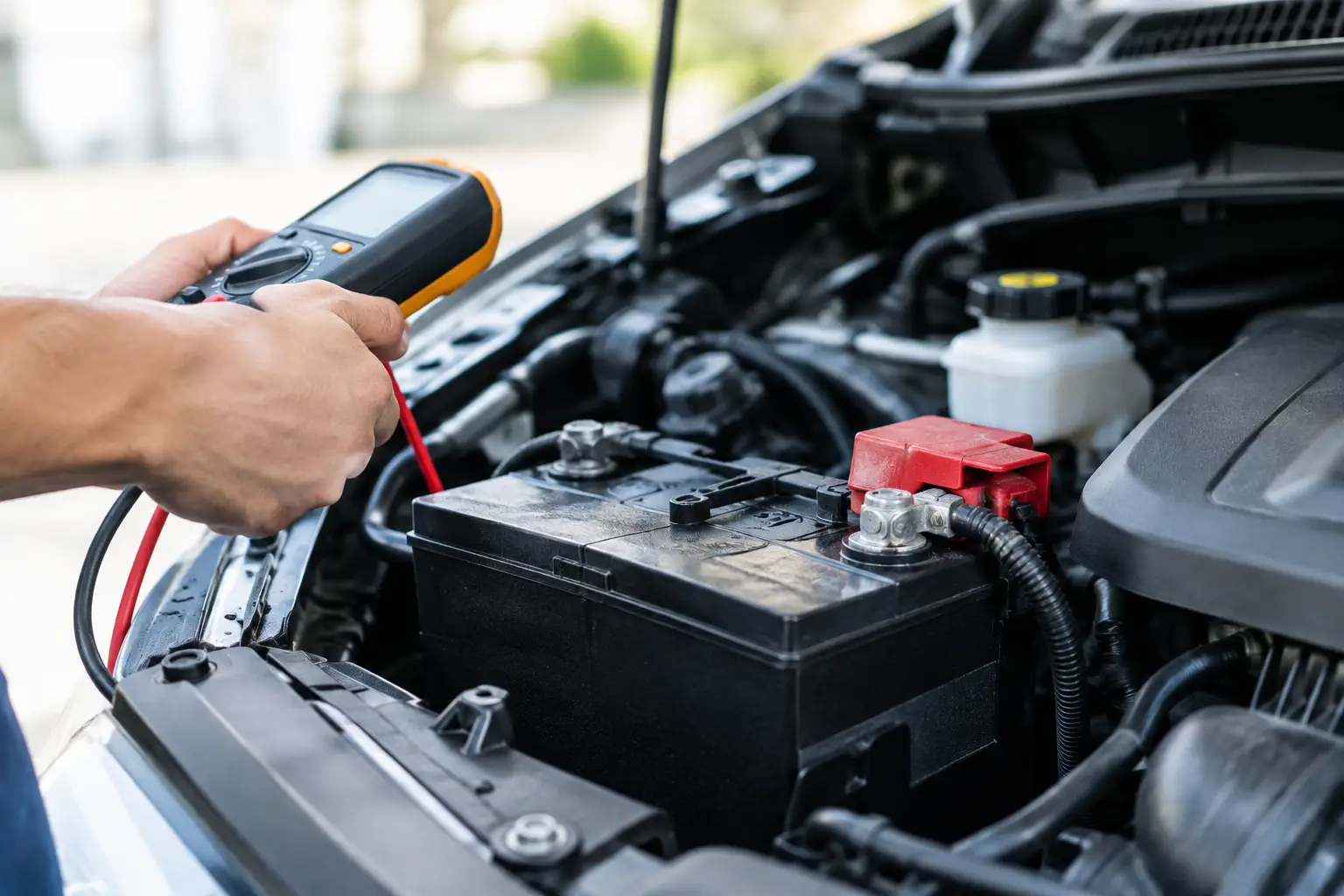
Once the engine is running, do not assume a short drive has fixed the fault. If the battery warning light remains on, electrical symptoms continue, or the vehicle goes flat again, arrange a professional test. A technician can check battery health, alternator output, wiring, earth points and unwanted current draw before recommending repair or replacement.
How to reduce the chance of a flat battery
Regular use and routine servicing give the battery the best chance of a long life. Keep terminals clean and secure, make sure lights switch off properly, and avoid leaving accessories connected when the engine is not running. If your driving is mostly short-distance, consider an occasional longer journey or approved battery charger.
When replacing a battery, specification matters. Many vehicles require an AGM or EFB battery for stop-start systems, and some need the new battery registered or coded to the vehicle's battery-management system. Fitting a cheaper conventional battery where a specialist type is required can lead to poor performance and a shorter lifespan.
For drivers in Surrey and West Sussex, a recurring flat battery is worth investigating before it becomes a roadside breakdown. Elite Vehicle Servicing can test the complete starting and charging system at a convenient location, helping identify whether the answer is a battery replacement, an alternator repair or a more complex electrical fault.
A battery should not be treated as a part that simply fails without warning. Pay attention to slower starts, warning lights and repeated loss of charge, and deal with them early. A clear diagnosis now is usually safer, less disruptive and better value than waiting for the morning your car will not start.
Comments